Arequipa, Peru #14
June 26,
We were up and reading for the day by 0700. I had a wee bit of coffee left as we did not get any yesterday. So I had a mocha with some of Jeff’s hot chocolate. We had a fried egg open sandwich for breakfast. It was a good start, even though my passport is still in limbo.
We set out by 1000. We have decided to go to the Monasterio de Santa Catalina de Siena or Santa Catalina Monastery. We attempted to come here before, but today we realized we weren’t at the main entrance. It cost us 50 PEN or $14.61 each. As soon as we paid and entered, we were given an option of private guide or group tour guide for additional costs per person. We opted to do our own tour with the available QR code/scan. Within ten feet, I remembered this place! I knew we had been here before. Jeff, of course, remembered being here – site unseen – from two decades ago! (He has been so blessed with this, I don’t know if he realizes this.)
We ended up spending three hours going through here – the guided tour was supposed to last only one hour. The monastery was consecrated in 1579!!! That is only 87 years after Christopher Columbus discovered the Americas! That was also 197 years before the USA became, well, the United States of America! Incredible!!
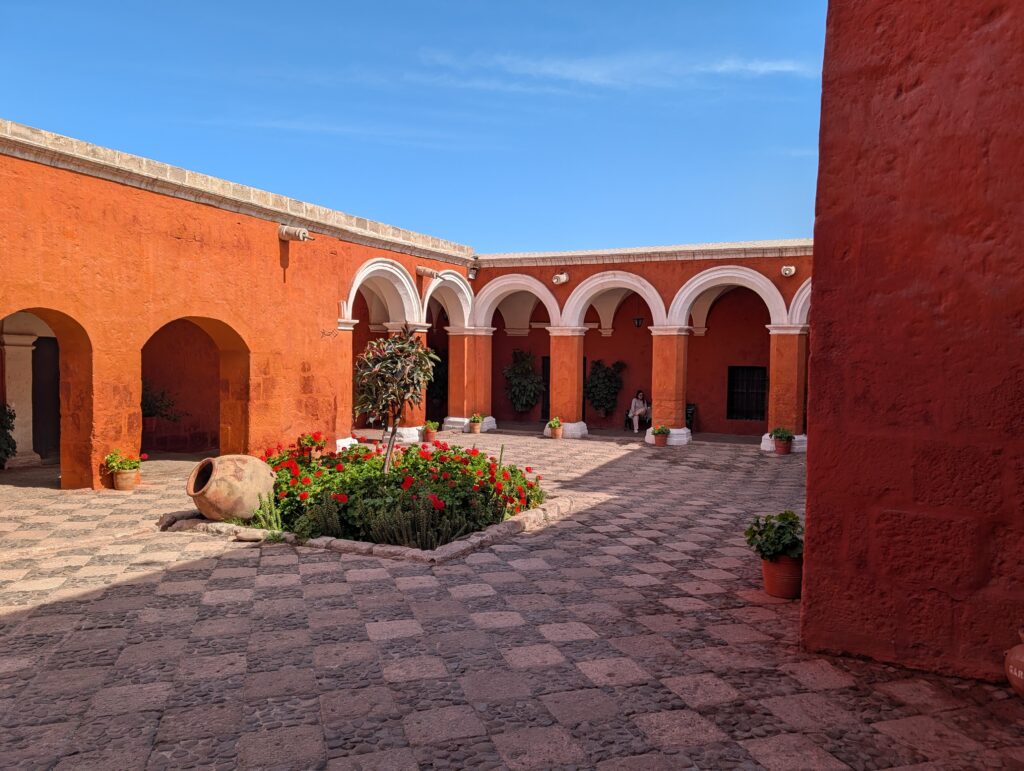
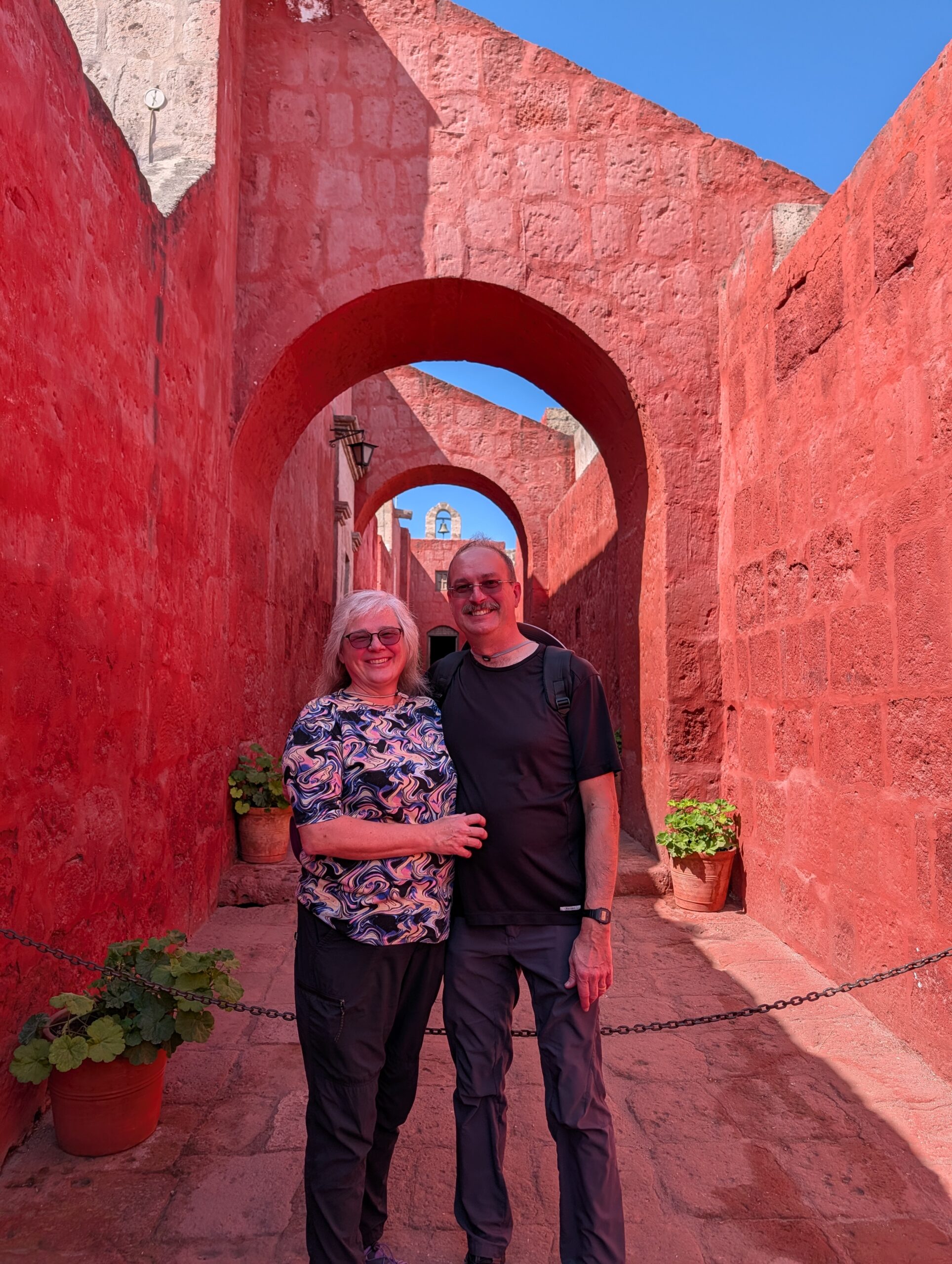
The tour started with The Visiting Room, where the cloistered nuns could receive visitors, but always in the company of a “listener” nun. Next was The Meeting Room, where visitors such as the Bishop, where nuns could work on embroideries. One whole end of the room was life-size wooden sculptures representing the Last Supper, dating from the 18th C. In this room a placard told of the walls being made of the volcanic rock “sillar” and it’s painted with natural pigments. And the most incredible thing – “The Santa Catalina Monastery was (just) opened to the public in 1970 after 391 years of isolation.”!! Next we passed under The Arch of Silence and actually entered the Monastery, with the first of many patios. The walls lining this patio are painted in a reddish oche color. It made a pleasant little patio.
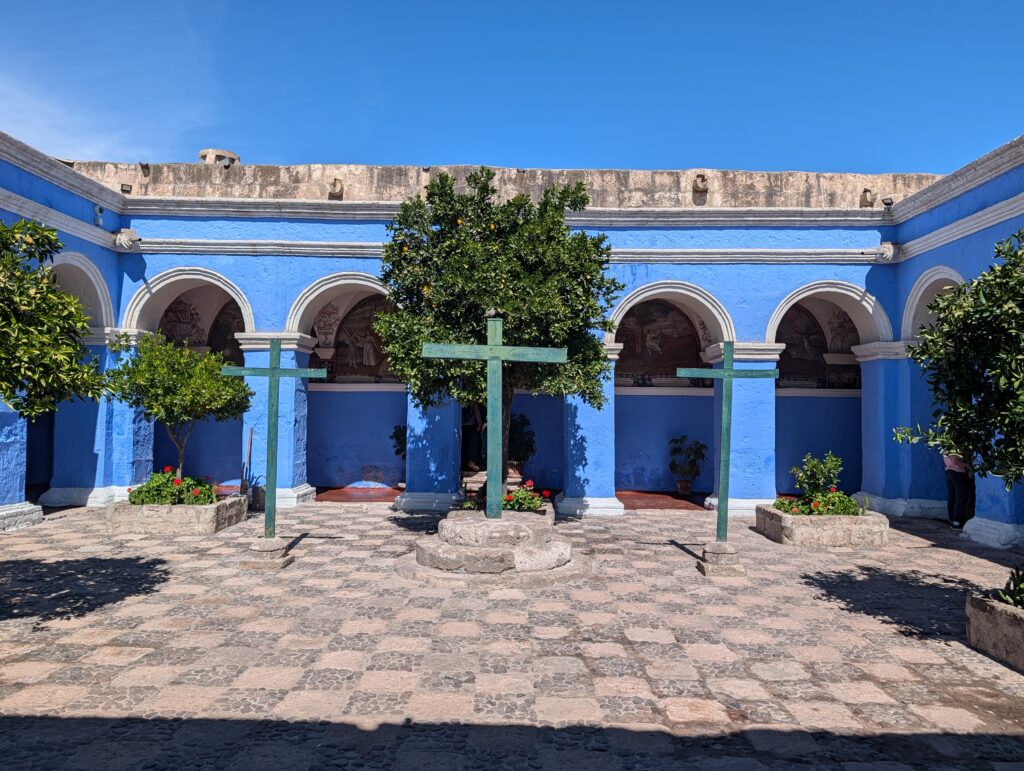
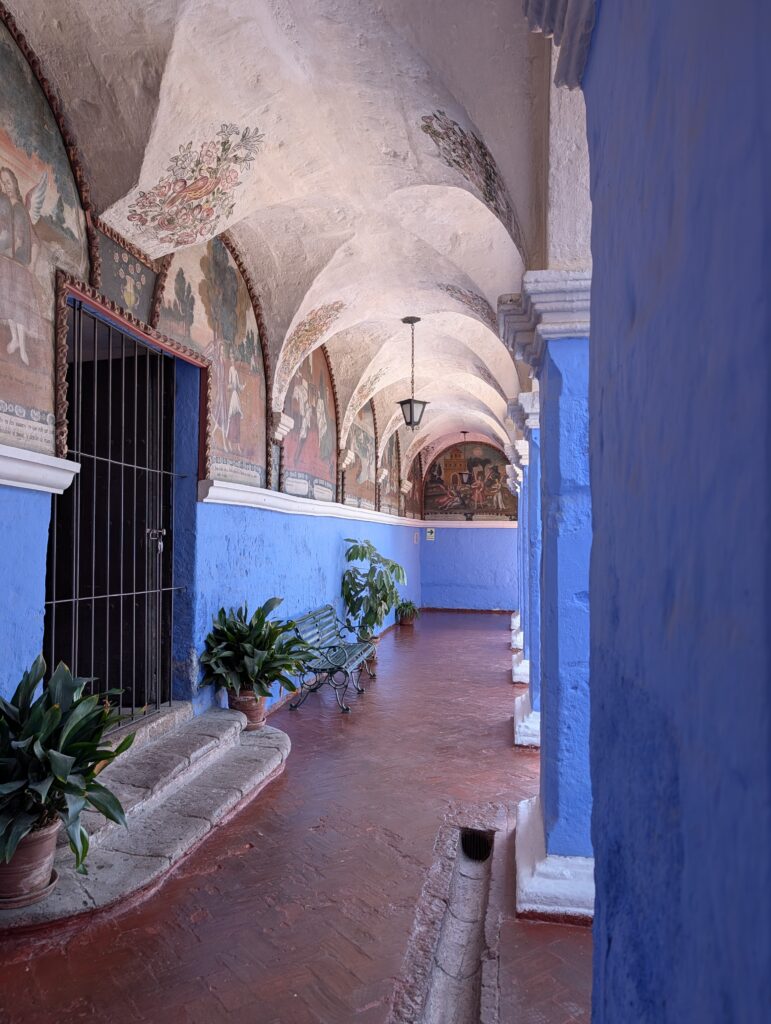
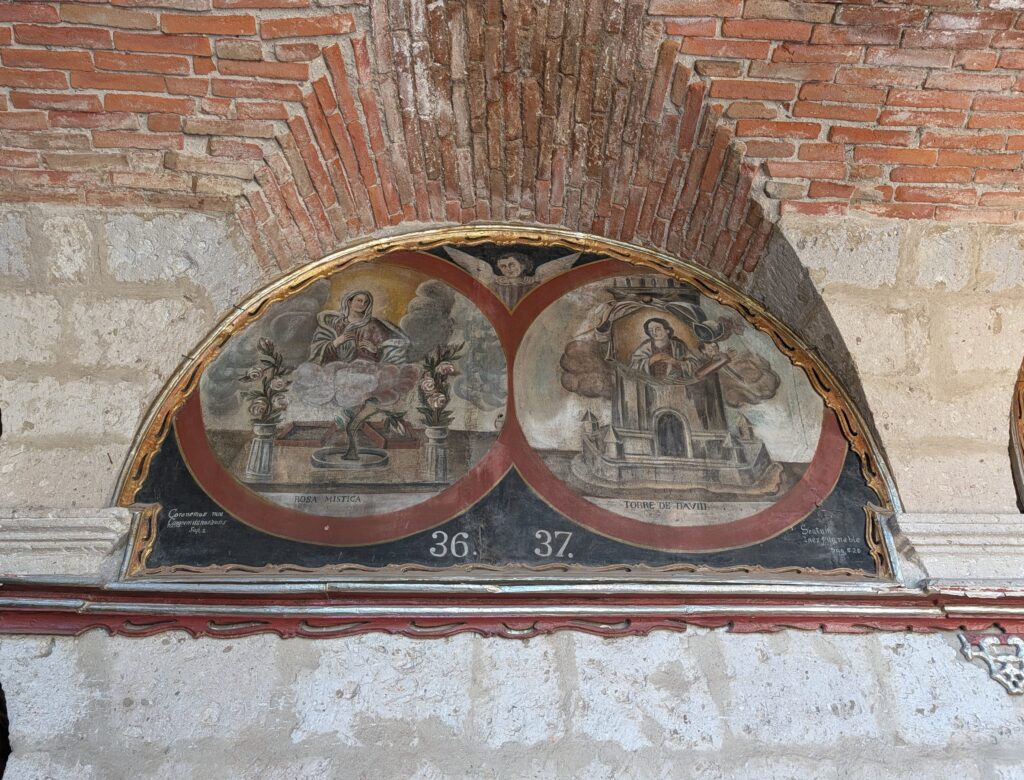
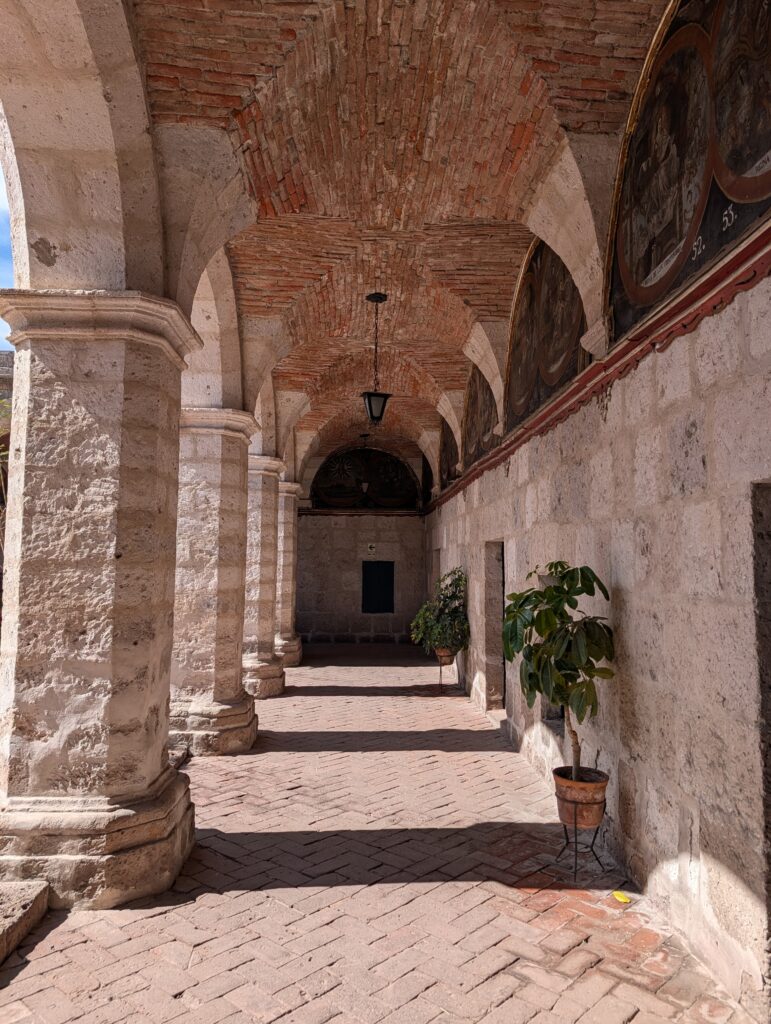
From the patio the way opened to The Novice Cloister. This was a squared area that housed small individual rooms/cells for each novice facing the arched-columned walkway of the square. Some cells were set up to see how they lived. The novices could not contact family or other nuns…really isolated! Back on the walkway, under the arches of columns were paintings aligning the ceilings. The volcanic stone walls remained unpainted. The novices even had their own chapel. From here the way led to the second cloister, The Cloister of the Orange Trees. In the center were a few orange trees and replicas of the three Crosses of Golgotha. The walls here are painted bright blue and have different paintings under the arches. This was a cloister of cells for professed nuns. Again we were able to view and go into the individual nun’s cells (some were likened to a small villa), all decorated differently and of varying size. Many were more than one room, as every nun had her own “kitchen”- a masonry oven and various pots/pans. The tour info read that once nuns professed their vows, their families rendered dowries, and paid for construction of the nun’s cell or chamber. Each bed was under an arch for safety from earthquakes. Also each chamber had a niche altar for an image of their choosing, and usually they had a private patio. A couple of chambers had sewing rooms, or music rooms. Built in this cloister was also The Profundis Room, a place where nuns could remember/mourn deceased nuns through pictures aligning the walls or the remains of a recently deceased nun in a coffin support box surrounded by candles.
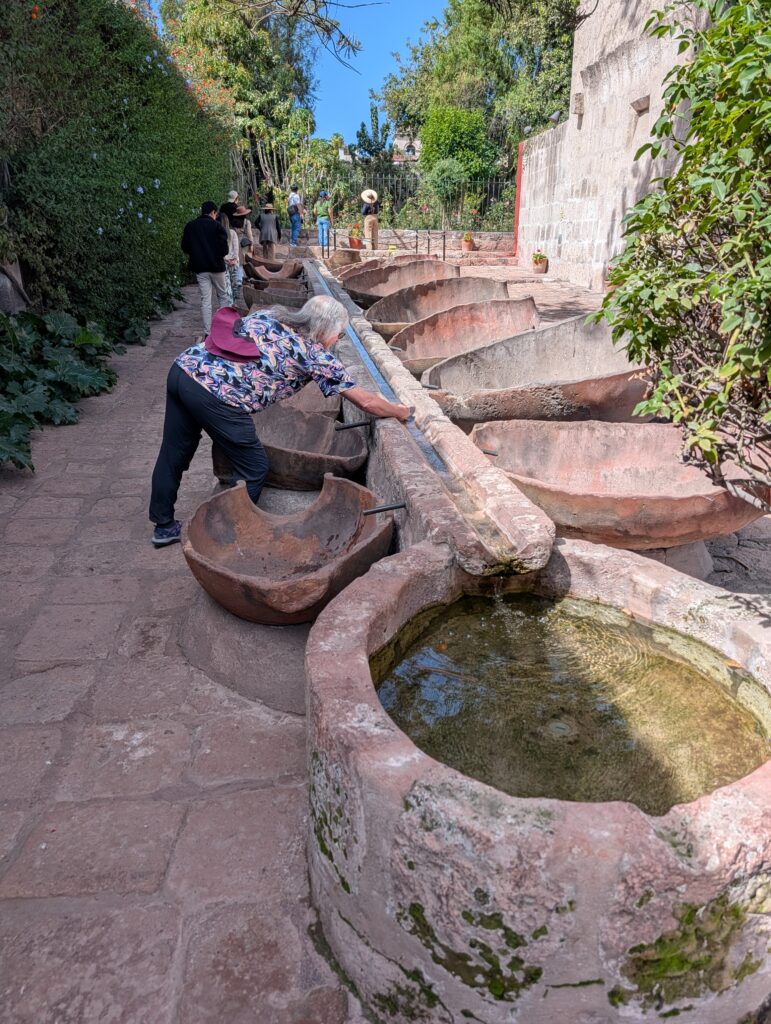
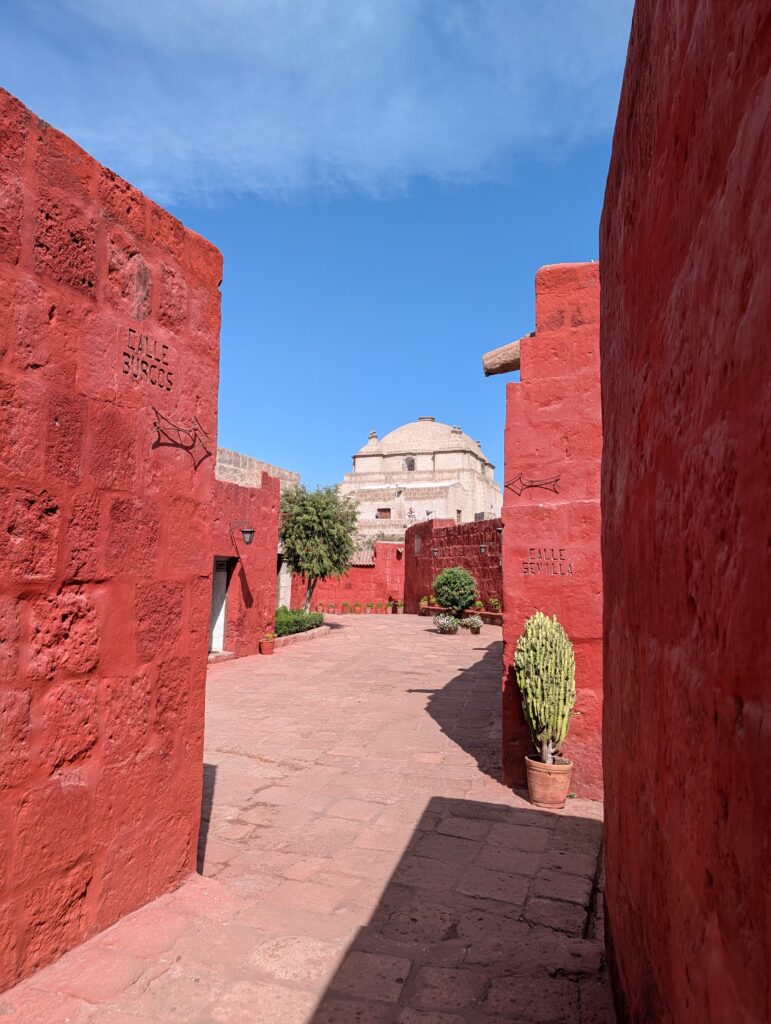
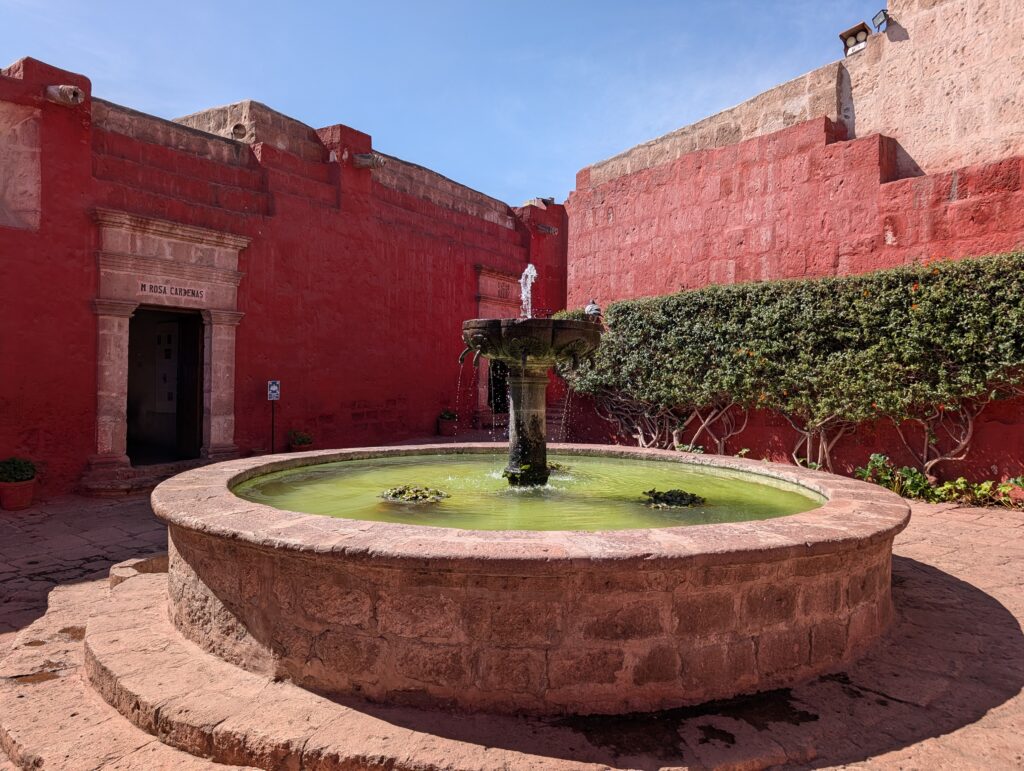
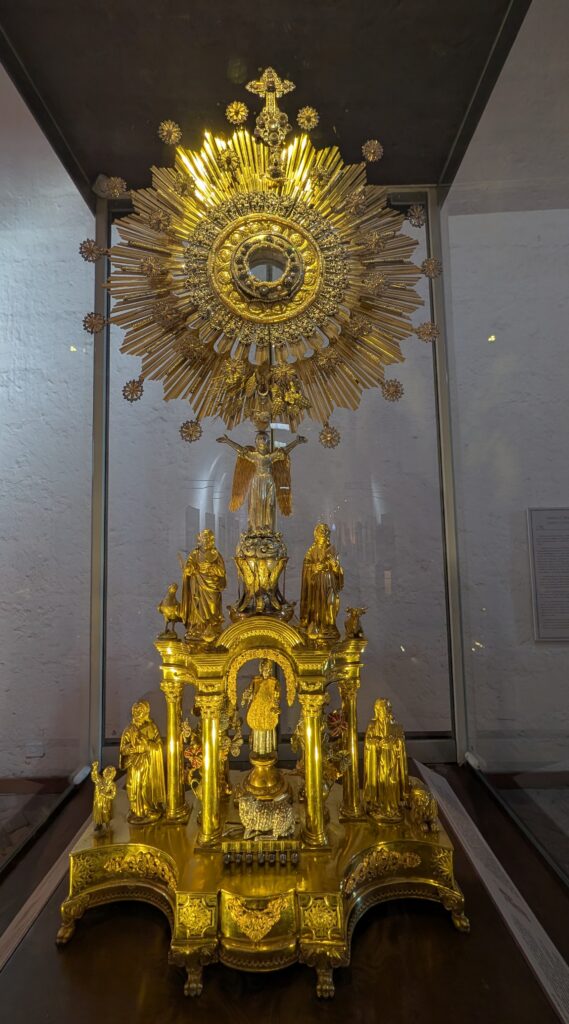
We exited the cloister and came up on the “citadel of Sainte Catherine.” There were six streets with rows of little houses, more squares, and all manner of trees and plants. It really was like a town inside the city of Arequipa. There was an infirmary- which now shows off liturgical objects, cutlery, and other valuable pieces that came with the nuns as part of their dowry. Also a cemetery (not open to us), a large kitchen, dining area, and a “laundry.” The laundry was a simple irrigation trough that water could be diverted into one of twenty half vat tubs to cleanse your habits. It was a genius setup. The vats were originally wine and pisco holders.
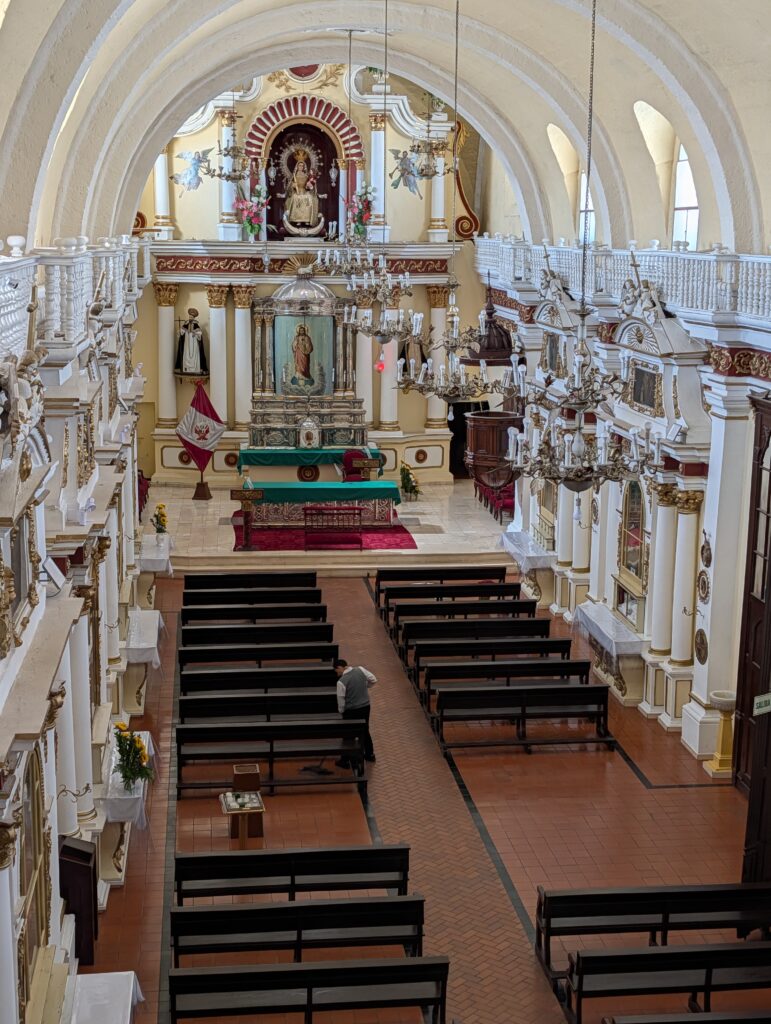
We went to Zocodober Square and up the steps to the Mirador built right next to the Church dome area for grand views of the complex of the Monastery and the city outside surrounding the monastery. Then we worked our way to the third and last cloister, called The Main Cloister, built last in 1715 and 1721 – it’s the biggest. There were arches around a square, more painted ceilings and one wall had confessionaries. Many other chambers lined the cloister square that we visited. We then went into the Lower and Higher Choir rooms from where we could view the inside of a church connected to the monastery through a lattice wall and see the organ of the church. Lastly we walked through a hall that was a community dormitory. It now houses an art gallery, and sometimes has a classical music concert. There were other structures of the “city,” but I am running this long already. Needless to say, we enjoyed our tour of the monastery.
We exited and went to lunch at the Red Pig. We had great hamburgers – a Baconator, and a Carnivora. We paid 84 PEN with the tip, which is $24.61. Then we went to Kaffeehaus and I tried & bought some Peruvian coffee. What a great day!