Bariloche, Argentina #48
April 9,
We weren’t out of bed until 0800! It was later than we wanted or expected. Oh well! The sun just came up too! So we weren’t the only ones sleeping in. 🙂 We readied, had our Javas and breakfast of banana each and I added a plum, then we got started by 0915. We have planned to do a drive of Camino de los Siete Lagos, or the Route of the Seven Lakes. But of course first we stopped to get gas…it was 1,783 ARS/liter. Jeff had them fill it – all stations have gas attendants. The total was 38,142 ARS, or $27.67.
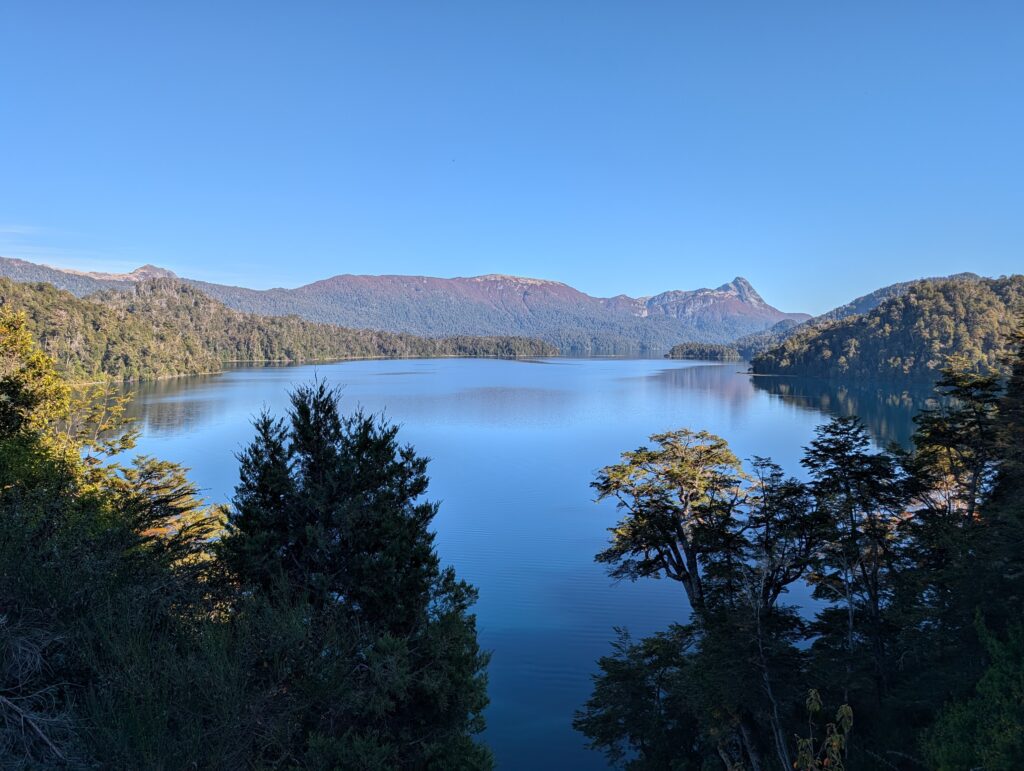
By 1000, we had left Dina Huapi town and entered the Nahuel Huapi National Park. FYI, the cities of Bariloche and Dina Huapi are along the Lagos (Lake) Nahuel Huapi. It is a big lake and is actually the starting lake of the route. There is not an entrance fee for the park, as the road is highway 40 that runs the length of Argentina from Bolivia through Mendoza around El Calafate then curves to the Atlantic Ocean, about the southernmost places you can drive without a ferry. Anyway, starting north the landscape quickly opened up with view over the #1 lake back to town. The road has been a scenic drive along the same lake, hugging along branches and fingerings of it for some time. At 1046, we came to a police check point that was actually pulling people over. By the time we were next, the police waved us through… don’t know if it’s because of our skin color or there was only one policeman left to direct traffic. The checkpoint is somewhat near the border of Chile and Argentina. Then we came to Villa La Angostura – can see the Bavarian influence for sure here. The town is small and a tourist shopping haven. We continue on and quickly came to the #2 lake, Lago Correntoso, on our right, with the first lake still on our left. The road crosses over the Correntoso River that connects the two lakes.
Then we drove a small stretch of road and the first lake, on the left, changed to the #3 lake, Lago Espejo (Grande, as there is a smaller one called Espejo Chico). We stopped at the panorama viewing of it. The placard here explained Espejo means Mirror, as it was likened to a lake like a mirror. The placard also mentioned a gold-green frog from this area. We moved on then passing by two little lakes and came back to #2 lake, and it’s panorama viewpoint. The placard here told of Correntoso meaning “with strong currents.” Also the critter mentioned here was the Huillin, a Patagonian Otter. We did not see any, but that would have been fun. Otters are great to watch. We moved on taking a side road (65) to go to a separate lake, not mentioned on the route. It was on and off paved/gravel with construction work in progress as we drove. We stopped at a camp area on the small lake, Lago Traful, our destination. It was pretty peaceful with a bird calling. We could not get pictures as the sun was hitting us wrong. But it was lovely! We drove, backtracking to the main road, through the road work again. I bet the construction workers hate the dust the vehicles raise. Anyway, back on main road, Hwy 40.
We came to #4- Lago Escondido, #5- Lago Villarino, and #6- Lago Falkner; all in quick measure. The fourth lake, Escondido, means “hidden” as it was more “secluded inside the forest,” according to its sign. This sign mentioned “the Southern Pudu, smallest deer in the world…lives in the forests.” The fifth lake, according to its sign, read that its name – Villarino – came from “the explorer Basilio Villarino” and the critter it mentioned was the “Huemul, a Patagonian deer…and its endangered.” Lastly, the sixth lake, Falkner. The placard there read that it was named “in memory of Thomas Falkner, an English Jesuit missionary”; it also mentioned the “Great Grebe,” a bird.
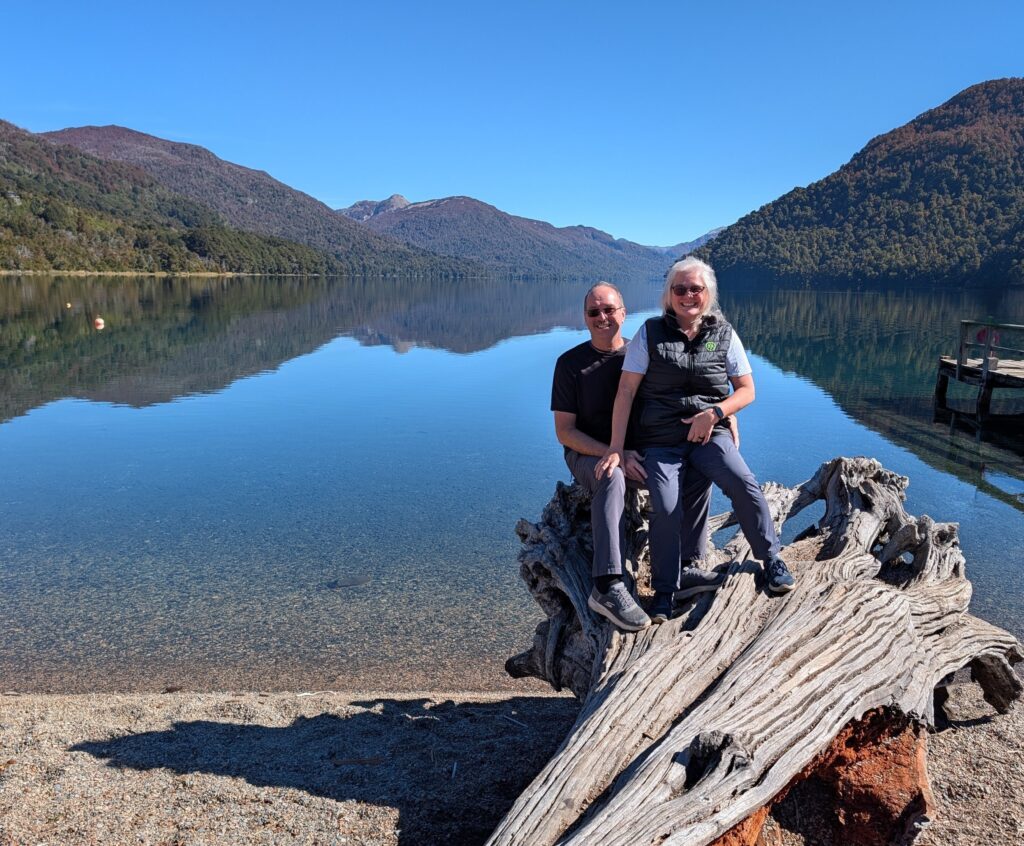
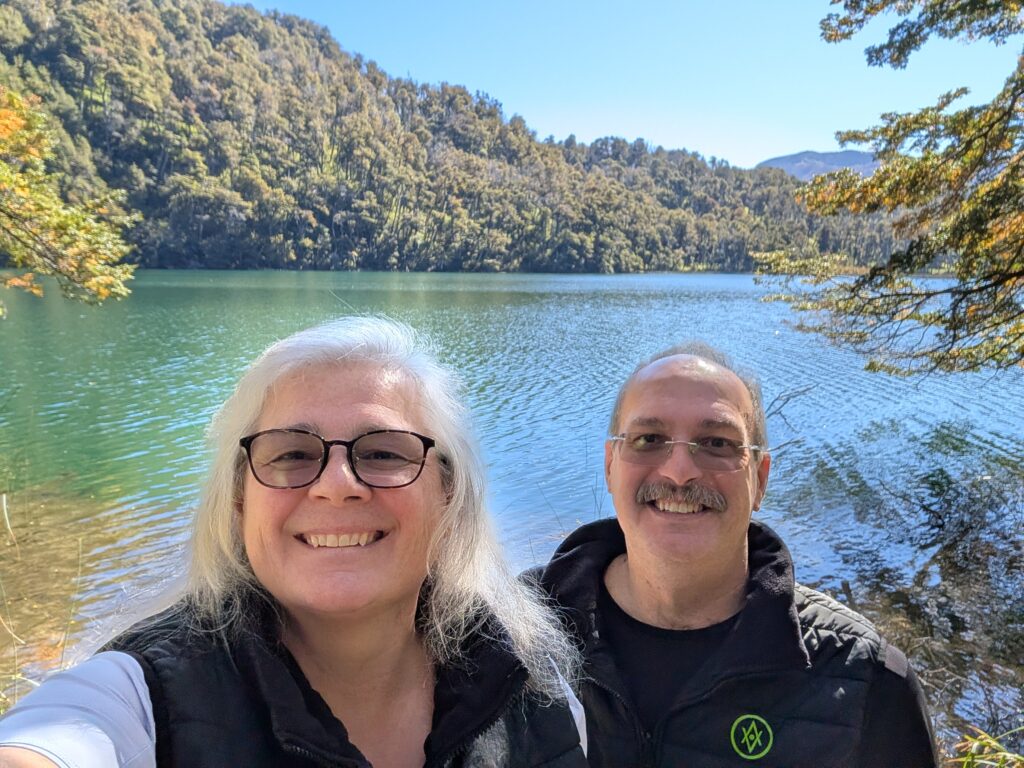
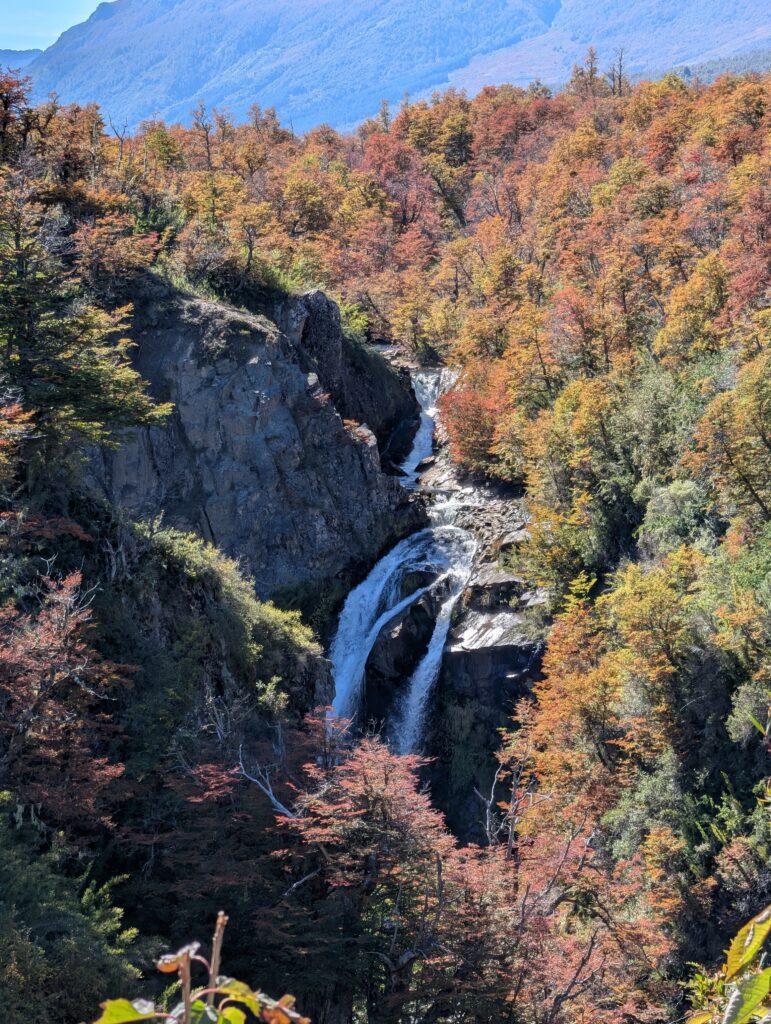
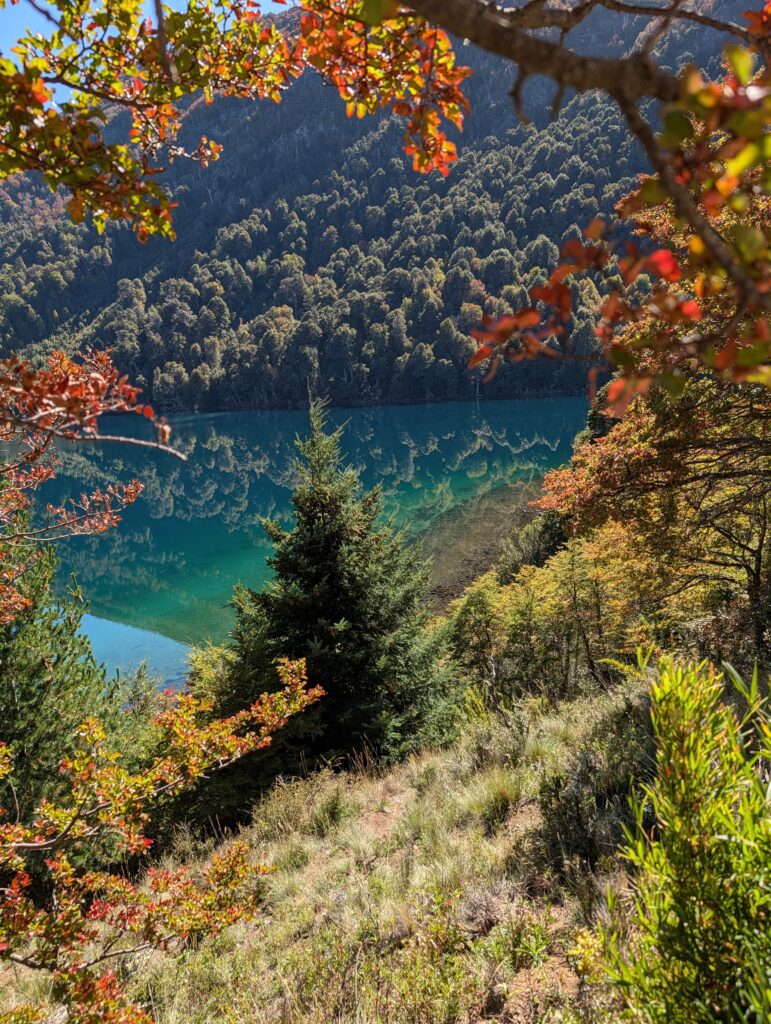
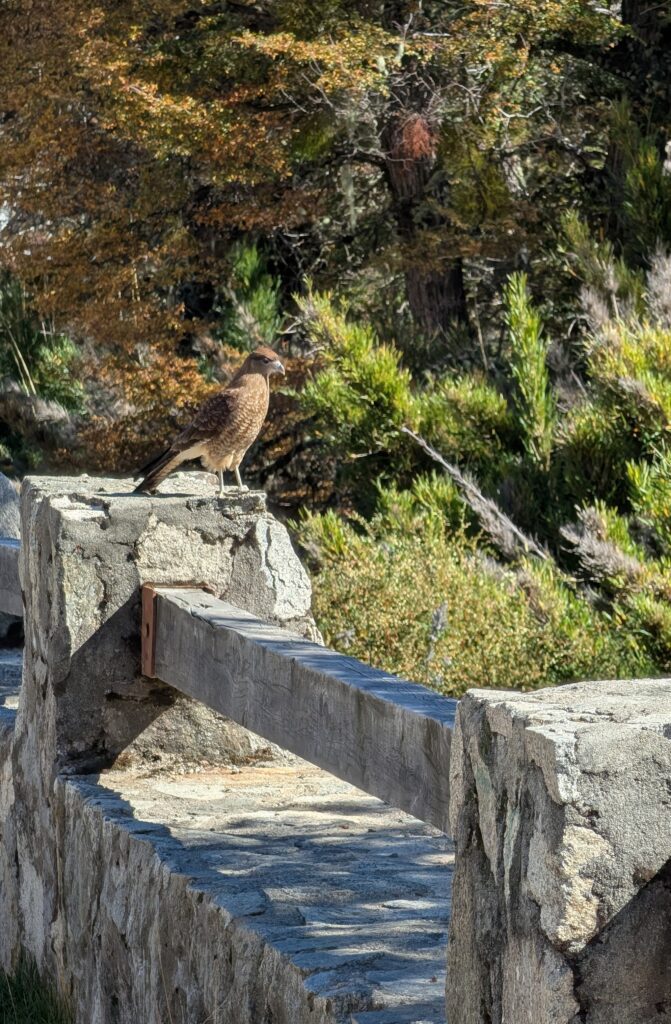
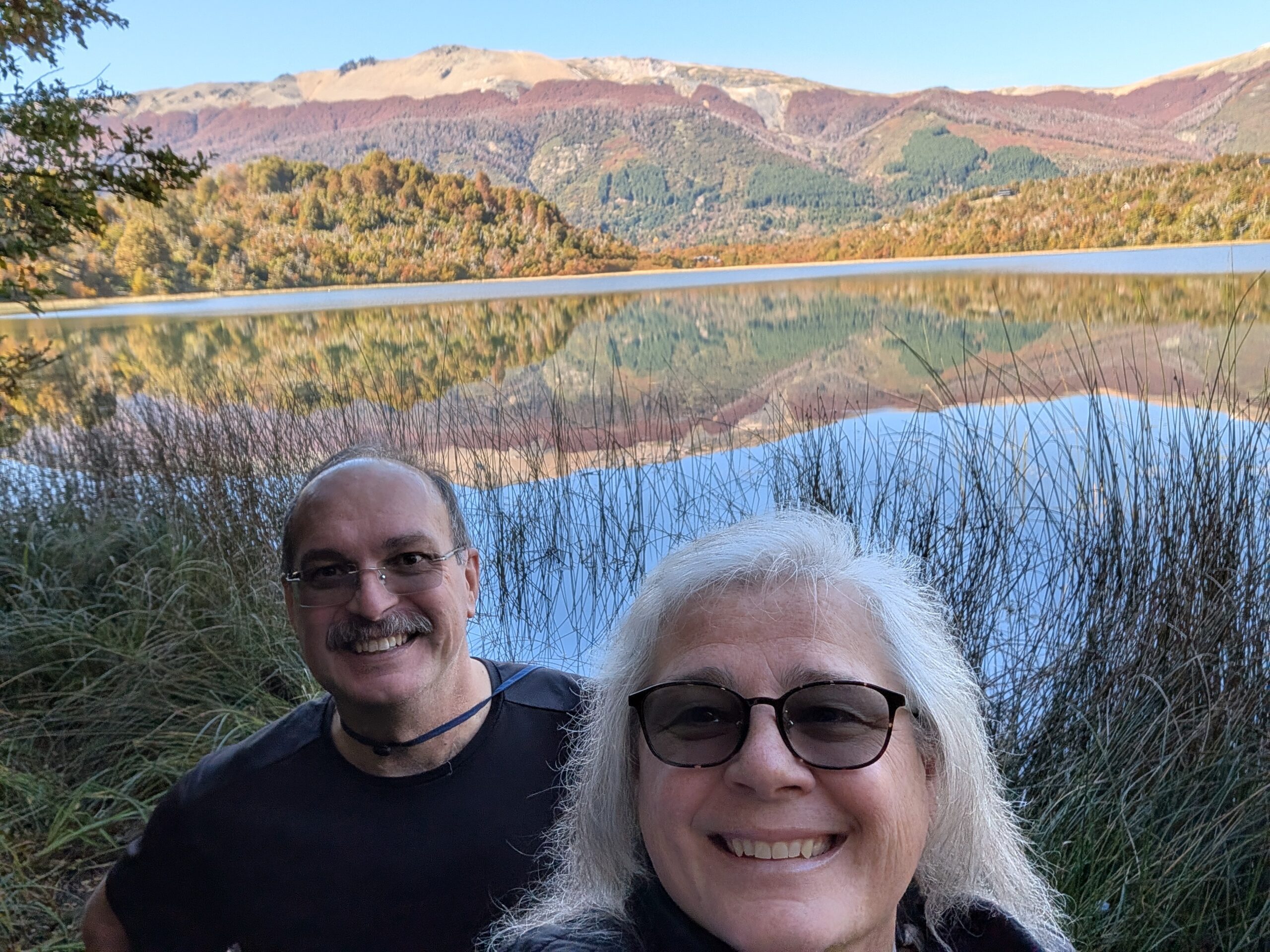
Next on the route was Cascada Vulinanco, an overlook of a gorgeous waterfall. The placard described Vulinanco as coming from the Mapuche language and “means harrier’s hill, which is a bird of prey, also called a ‘White-throated hawk’”. One hawk just happened to be there, as if it could read the sign! Then we took a turn off, for two “off route” lakes: Pudu Pudu & Hermoso. We were both glad for this turn off as these may be our favorites. They were the kind you could sit on the banks of and enjoy nature: unrushed, peaceful & serene, maybe do some fishin’. At the second one, Lago Hermoso, there were more people doing just that. One couple of tourists returned a favor and took our picture, as I had taken theirs. Would have liked to spent all day here, but we went back onto Hwy 40 and to #7 Lago Machonico. The placard at this lake read that “in Mapuche…machonico means ‘water with pancora.’ Pancoras are freshwater crabs found here.” We did not see any of them, as with their main predator the otter. The only animal we have seen, mentioned on the signs was the hawk. We moved on.
Next, we turned off-route, along another gravely, ‘under construction site’ road, following the Rio Hermoso to Lago Meliquina. We saw it from the road but didn’t get out due to all the dust being raised up. Bummer! So we turned back around to the main road. Now we just drove into San Martin for a late lunch. We bypassed the last three outlooks/stops, but soaked in the views. (We will stop on our way back through.) We were hungry.
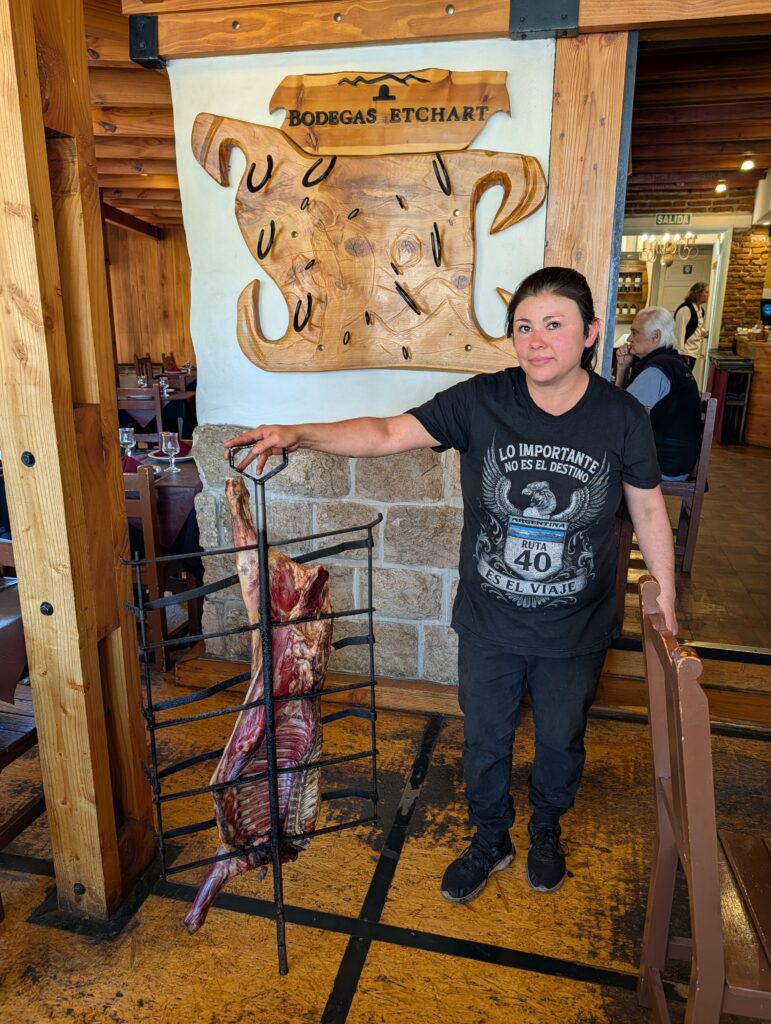
Arrived in San Martin by 1435 – it sits at the east end of Lago Lacar and the end of the Camino de los Siete Lagos. (We noticed this to be lake number eight…questions??, I have.) We drove to Posta Criolla Restaurant. We had the Parrilla- Complete Grill set for two, which included: Chorizo, Blood Sausage, Sausage, Mixed Skewer, Short Ribs, Flank Steak, Beef and Pork. I had a glass of wine. They had the spits of lamb roast/smoking and took one off while we sat there. The carnivore meal cost us 72,800 ARS or $50.91. We finished and went to a grocery store, where we saw the half sides of lamb for sale…one cost 136,346 ARS or $98.91.
We did the return trip, back on Hwy 40, and took our time to stop at the last three stops: the views of the Lago Lacar (a glacier fed lake, of course, and the #8 lake); Valle del Arroyo Pil Pil- which “is a climbing plant used for weaving and crafts”; and Arroyo Partido- which “translates as ‘the divided stream,'” as further downstream “the waters collide with a wedge of rocks… dividing them into two arms – the right flows to the Pacific Ocean and the left flows to the Atlantic ocean.” That’s so cool!!
Anyway, we enjoyed the drive back as the sun started hitting its golden hour, making the changing poplar trees shimmer and pop more with their fall colors. Somewhere around Villa La Angostura, we picked up a young man hitchhiking to Nahuel Huapi town. He did not speak English, and I didn’t have a cell signal…so no communication happened. When we let him out, he was very appreciative.
Back in Bariloche we stopped at another grocery store and picked up a few things. Finally we arrived at our house by 1910, settled in having just part of a cucumber for supper. It was a very good day!!! Blessed!